
ADVOCACY
We serve as a bridge between our grassroots movement, legislators, and nonprofit think tanks to shape youth-centered policy.
Our Advocacy Work
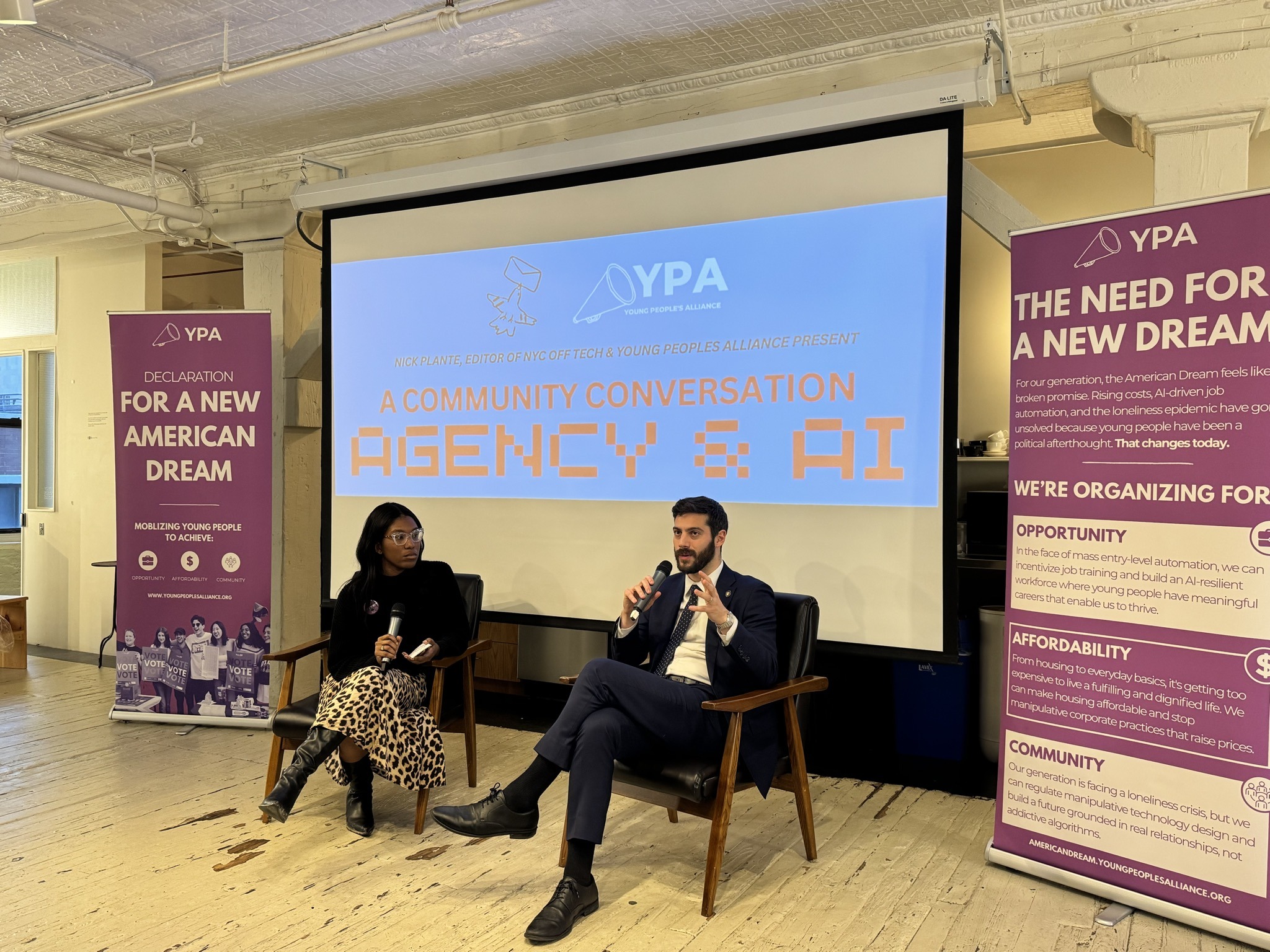
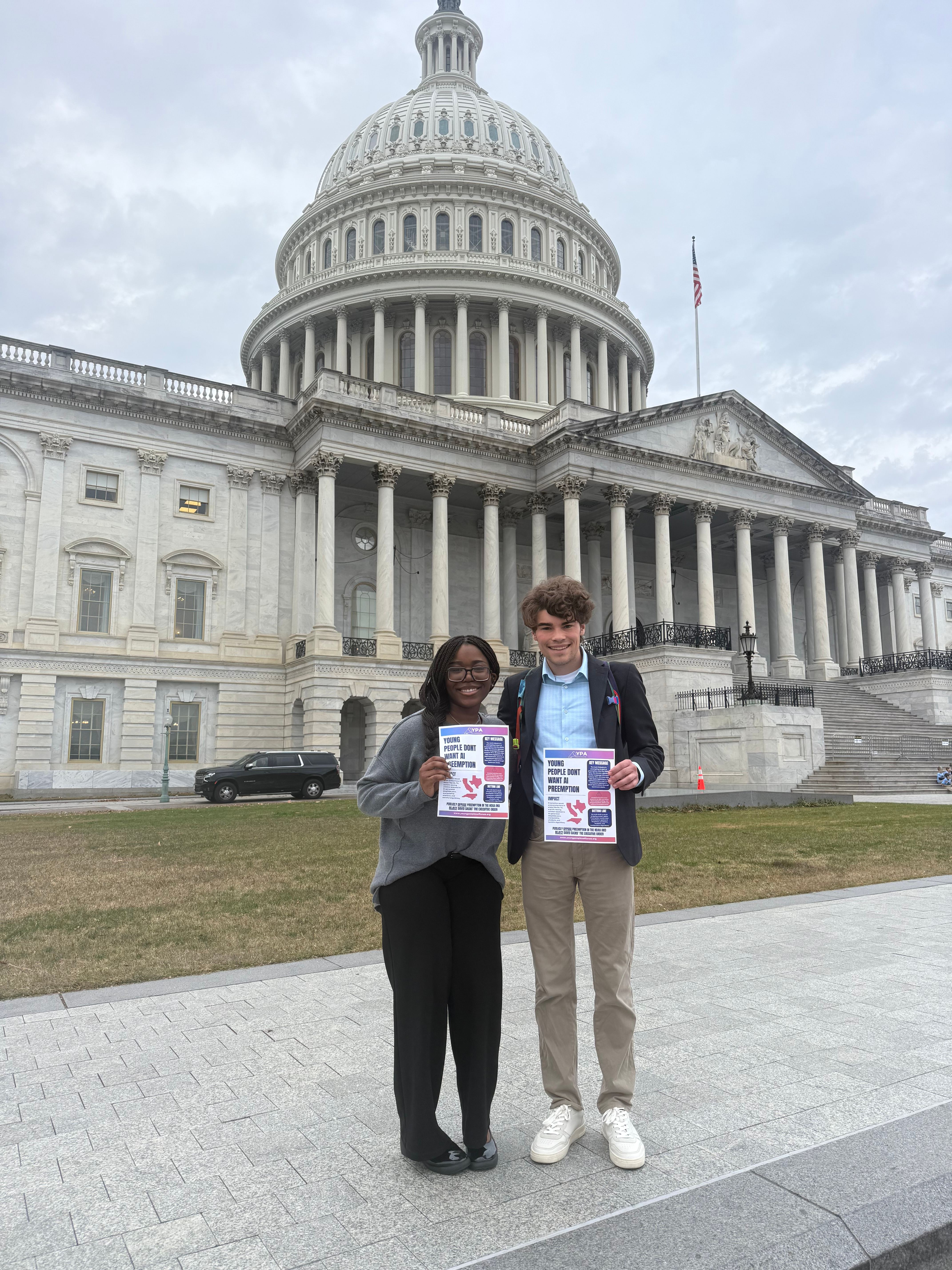
We directly bring young people into the policy conversations through our advocacy at the state and federal levels. Students educate legislators on the pressing challenges facing our generation and how they can be solved through policy. Our work has led to the introduction of several bills in state legislatures, successful changes to major bills like the Kids Online Safety Act, and helped to stop multiple efforts to block AI regulation by tech billionaires.
Leading on Responsible Tech
YPA works at the forefront of the fight to save our generation's agency from manipulative technology like social media and AI companions.
This year we launched and lead the Human-like AI Coalition, coordinating a bipartisan group of leading organizations to support youth-centered AI companion regulations legislation, grounded in our members' perspectives and experiences.
Members of YPA have also testified before Congress, published op-eds in local and national outlets, and worked directly with legislators to craft bills that protect young people without hindering innovation or young people's autonomy.
2025 Session
Our Policy Wins
Bills across seven states that reflect our framework or that we helped to amend.
Policy Tracker
Track legislation on our priority issues from the 2025 legislative session. Filter by platform area and state to see bills addressing affordability, opportunity, and community issues across the country.
Legend
All States
25 bills
CA SB243
Companion Chatbots
The law requires AI companion chatbot platforms to disclose that AI chatbots are not human and implement safeguards for suicide/self-harm content, including crisis referrals.
Signed into law
CA AB2023
AI Companion Child Safety
Requires operators of AI companion chatbots to conduct annual child safety risk assessments, implement design and usage safeguards to mitigate risks to minors, and undergo independent audits of compliance. Establishes restrictions on harmful chatbot behaviors, including excessive sycophancy, emotional manipulation, and unsafe interactions with minors.
Passed Assembly Committee, referred to Appropriations
CA AB1064
LEAD for Kids Act
This bill would have banned AI companion chatbots for children if they could encourage harmful behaviors (e.g., self-harm, violence, substance use, eating disorders).
Vetoed
WA HB2225
AI Companion Transparency
Requires AI companion platforms to disclose chatbots are non-human, implement self-harm response protocols, and restrict manipulative, sexual, and emotionally dependent interactions with minors. Enforced under the state's Consumer Protection Act, including a private right of action.
Signed into law
OR SB1546
AI Companion Protections
Requires AI companion platforms to disclose when users are interacting with AI, maintain suicide/self-harm detection and response protocols, restrict certain human-like, romantic, sexual, and emotionally dependent outputs for minors, and creates private right of action for users harmed by violations.
Enacted
GA SB540
AI Chatbot Minor Protections
Restrains covered chatbots from outputting sexually explicit content, simulating romantic relationships, and following engagement techniques, including excessive praise meant to deepen emotional attachment and reminders for a minor to return frequently.
Signed into law
FL S0482
Artificial Intelligence Bill of Rights
Creates an AI Bill of Rights to protect Florida residents from harmful practices including a provision that requires parental consent for minors to use AI companions.
Passed in the Senate
MI SB0760
Companion Chatbot Regulation
Prohibits AI companion platforms from providing chatbots to minors unless it is foreseeable that the chatbot cannot encourage self-harm, offer mental health therapeutic advice, and have sexual interactions with the child.
Passed in the Senate
KY HB227
Addictive Online Platforms
Establishes requirements to protect minors from AI companion platforms using addictive features and predatory data collection; to refine platform age verification for users; prohibits maintaining accounts for children without verifiable parental consent; creates a private right of action for platform violations.
Passed the House
HI HB1782
AI Protection of Minors
Establishes safeguards, disclosure requirements, prevents minor use of AI companion chatbots, oversight, and penalties for interactions between minors and AI companion chatbots. Based on Human-like AI Framework.
Enrolled to the Governor
CO HB1263
Conversational AI Protections
Requires conversational AI service operators to provide disclosures, restrict rewards and engagement features for minors, prevent sexually explicit content and emotional-dependence outputs for minors, and provide privacy and account-setting tools.
Passed the House
AZ HB2311
AI Chatbot Minors Act
Prohibits covered chatbots from making explicit claims that simulate emotional dependence and requires frequent disclosures for minor account holders.
Passed the House
ME LD2162
Children's AI Access Regulation
Prohibits minors from accessing human-like AI companions/social AI and requires age verification social artificial intelligence. Provides an exception for therapy chatbots if they have various controls in place; demonstrate through peer-review clinical trial data that the chatbot is beneficial for this use.
Passed the House but failed to advance in the Senate
MO HB2031
Children Harmed by AI Technology Act
Requires user account creation before accessing companion AI chatbots, age verification, parental account affiliation if the user is a minor and blocks the minor's access to AI chatbots that allow sexual language.
Introduced
MO HB2032
AI Chatbot Age Verification
Establishes 'reasonable' age verification requirements for AI chatbots and prohibits AI chatbots that can engage in sexual dialogue or encourage self-harm.
Advanced from Committee
MO HB1742
Companion Chatbot Provisions
Bans platforms from allowing a minor to access a companion chatbot for recreational, relational, or companion purposes; bans human-like AI chatbots and those that encourage emotional dependence.
Introduced
VA HB635
Artificial Intelligence Chatbots Act
Prohibits an operator from making a companion chatbot available to a user unless it is incapable of encouraging suicide and self-harm; requires data privacy and transparency protocols; includes provisions for consumer protection. Based on Human-like AI Framework.
Failed to advance in committee
VA HB758
AI Chatbots and Minors Act
Requires that any chatbot operated or distributed by the deployer does not make human-like features available to minors; implement reasonable age verification systems. Based on Human-like AI Framework.
Failed to advance in committee
NE LB939
Saving Human Connection Act
Requires that any chatbot operated or distributed by the deployer does not make human-like features available to minors; implement reasonable age verification systems. Based on Human-like AI Framework.
Advanced out of committee; amended into LB1083 but not brought to a floor vote
AL HB324
Saving Human Connection Act
Requires AI chatbot deployers to implement reasonable age verification systems, verify the age of each user, and ensure that AI chatbots with human-like features are not available to minors. Based on Human-like AI Framework.
Introduced
MN SF1857
Minor Chatbot Access Prohibition
Prohibits minors from recreational chatbot use and requires disclosure when interacting with AI. Provides civil penalties for violations.
In committee
OK SB2085
AI Protections Act
Requires parental consent for minors to use AI companions; requires AI platforms to take reasonable action to prohibit AI chatbot behaviors that are harmful to minors.
Introduced
WI AB965
Companion Chatbot Regulation
Restricts companion chatbots for children unless safety measures are in place to prevent language that encourages self-harm, sexual language, unwanted usage based on optimized engagement.
Introduced
NY S09051
AI Companion Chatbot Regulation
Prohibits chatbot operators from providing unsafe chatbot features unless they determine the user is not a minor. Covered features include simulated companionship, sycophancy, sexual interactions, secrecy or isolation encouragement, and engagement optimization that overrides safety guardrails.
Introduced
SC SB896
AI Chatbot Minor Protections
Requires covered chatbots to provide a limited-access mode, verify users' age, require parental consent for minors to access restricted features.
Passed Labor, Commerce and Industry
Lobby Days
We bring young people directly to their legislators to advocate for the issues that matter most. From responsible technology to affordable housing and workforce development. Our lobby days train students in effective advocacy and give them hands-on experience making their voices heard on our American Dream Platform.
800+ meetings with legislators and staff
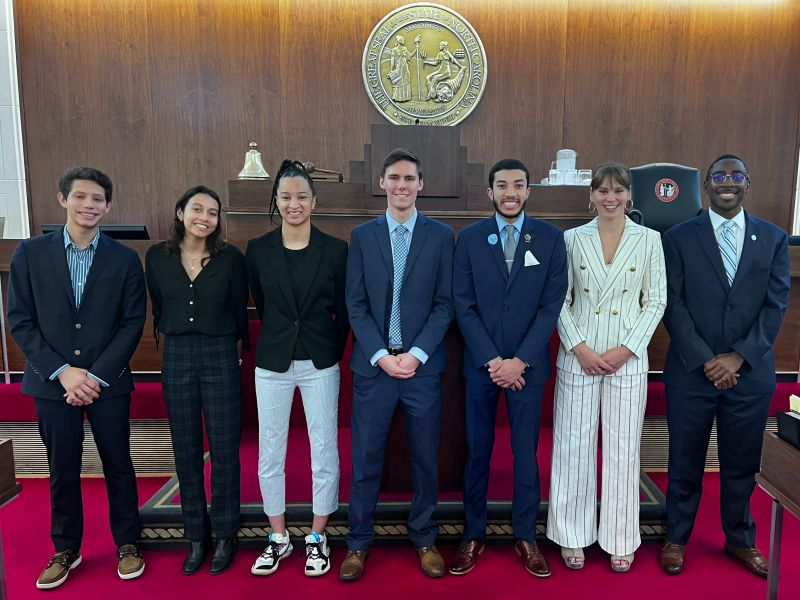
YPA members posed with legislator in NC State Senate chamber
NC Social Media Advocacy Campaign
After seeing firsthand how manipulative social media algorithms were affecting our generation, we wrote the first legislation on social media manipulative design features in North Carolina, H644. Through months of visits to the legislature culminating in our Spring 2023 lobby day, we got 12 NC organizations to endorse and 62 state representatives to cosponsor the bill. H644 passed the Judiciary 3 Committee unanimously, but was never given a hearing in the House Appropriations Committee.
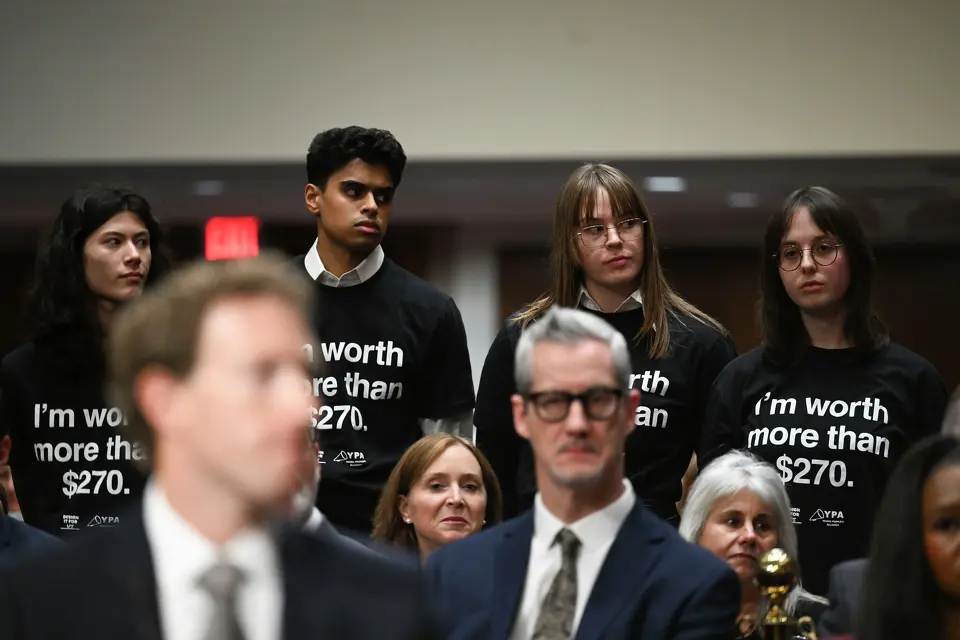
YPA members wearing 'I'm worth more than $270' shirts at Senate hearing with Mark Zuckerberg
Senate Judiciary Hearing on Big Tech
Our Advocacy Director and YPA members participated in a civic demonstration with partner organizations at the Senate Judiciary hearing on Big Tech and child safety. Standing behind Mark Zuckerberg, our members wore shirts reading 'I'm worth more than $270'—the amount Meta was fined per child affected by their platform's harms—sending a powerful message about holding tech companies accountable for their impact on young people's mental health.
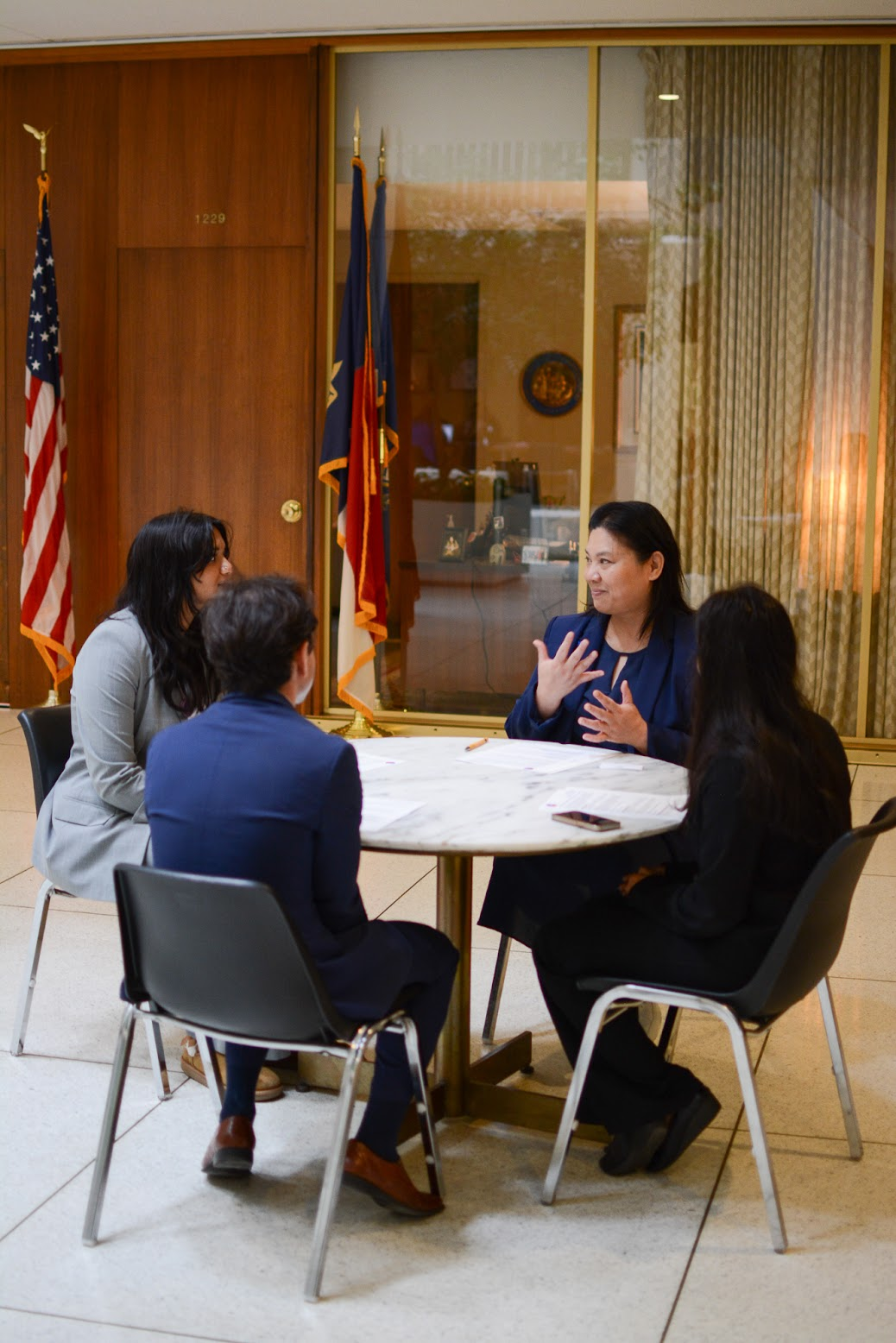
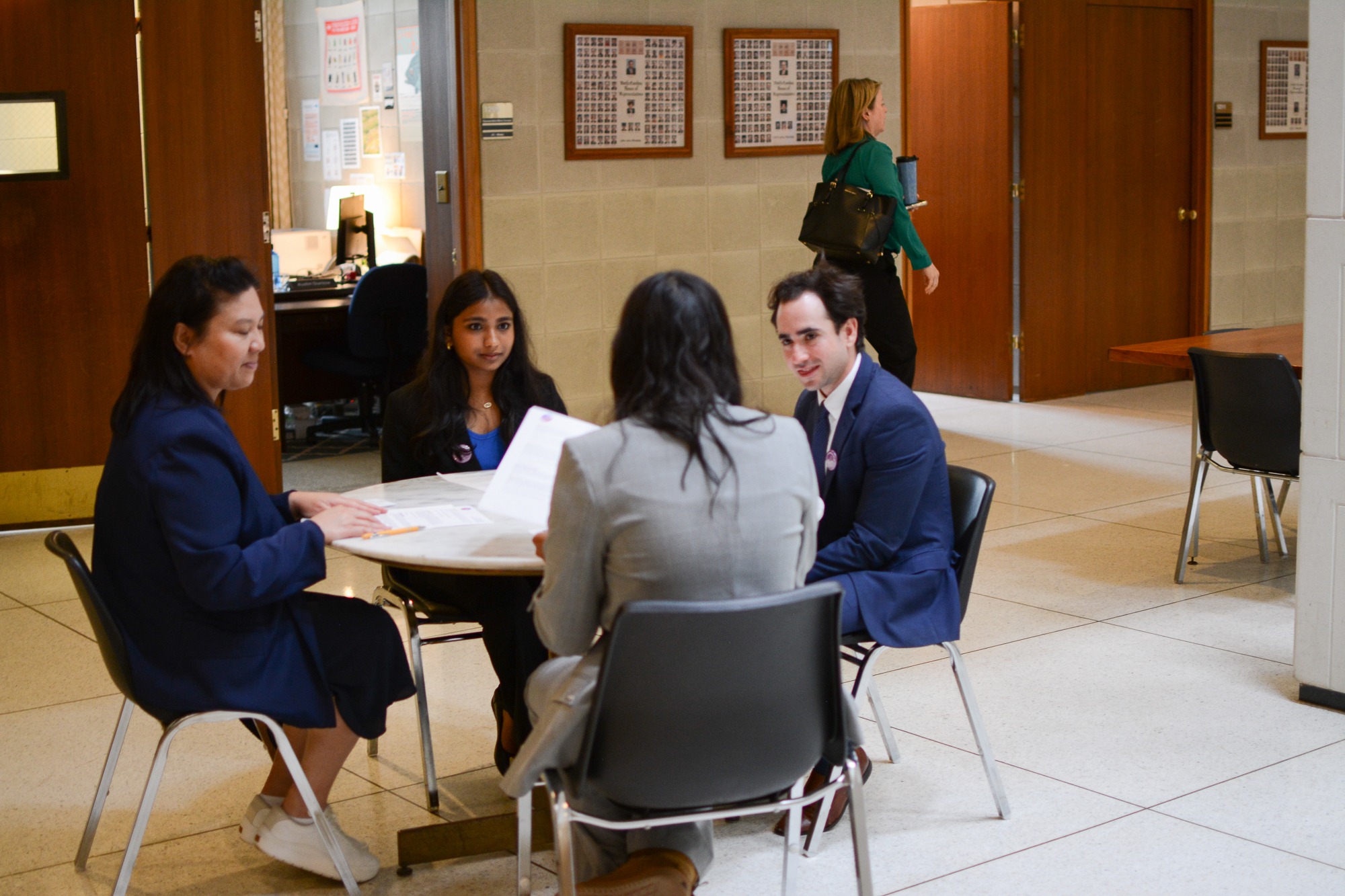
YPA members meeting with legislator at round table discussion
Youth Opportunity Lobby Day
YPA members met with legislators to push for comprehensive solutions to our lack of economic mobility opportunities the affordability crisis, and the erosion of our communities. We advocated for a set of 10 bills including SB 199 to limit institutional investors from buying up housing stock, SB 259 to expand mental health resources in schools, and SB 147 to make it easier for young teachers to work in NC. These policies address the interconnected challenges young people face in housing, mental health, and employment.
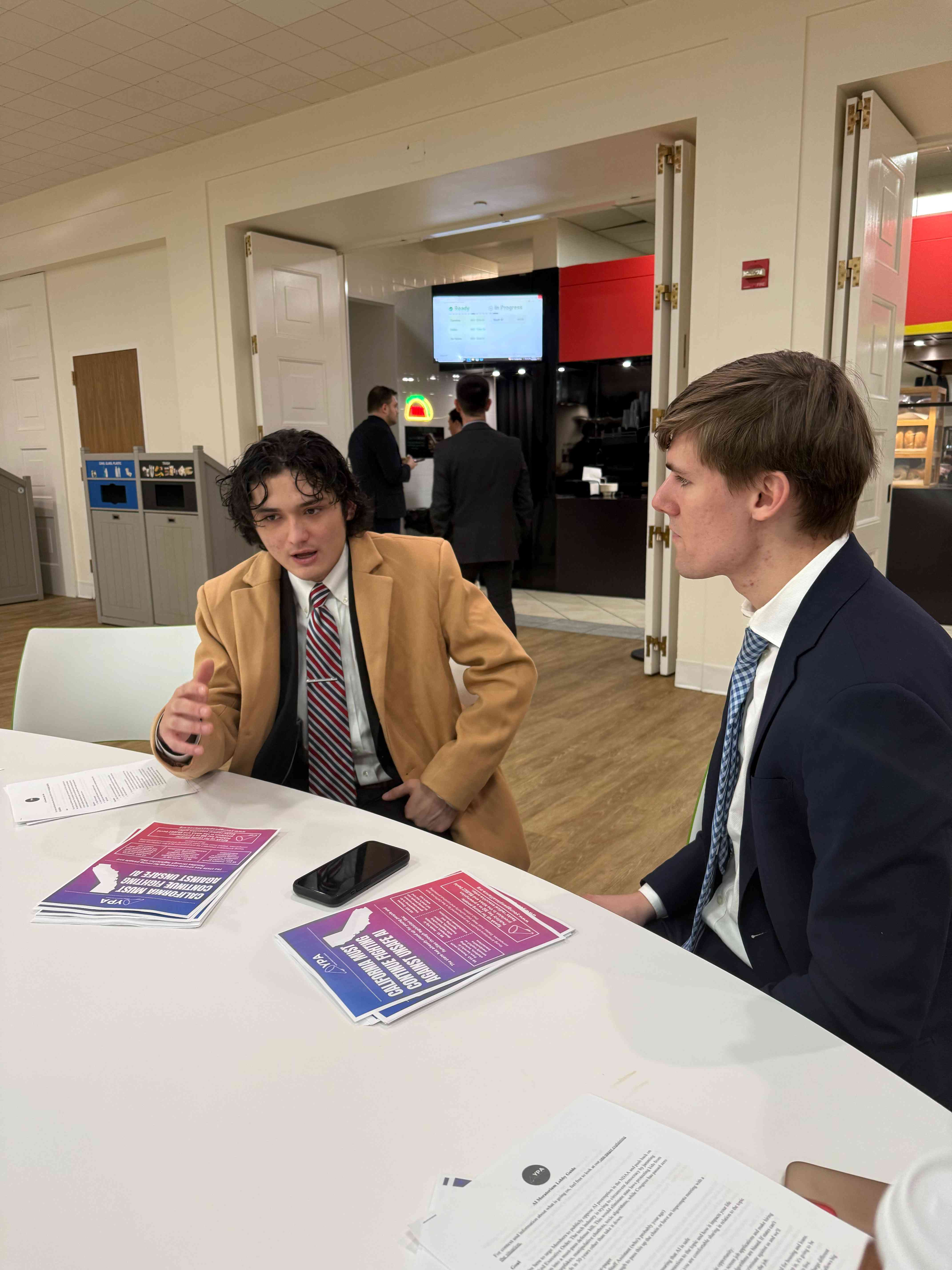
YPA members discussing AI policy with legislative materials
AI Moratorium Lobby Day
We rapidly mobilized after Big Tech attempted to push a ban on state and federal AI regulation through Congress, and reached over 100 offices while mobilizing hundreds of nonprofits and state legislators to build pressure. Together with a coalition of nonprofits, we were able to defeat the AI moratorium from being codified as legislation.
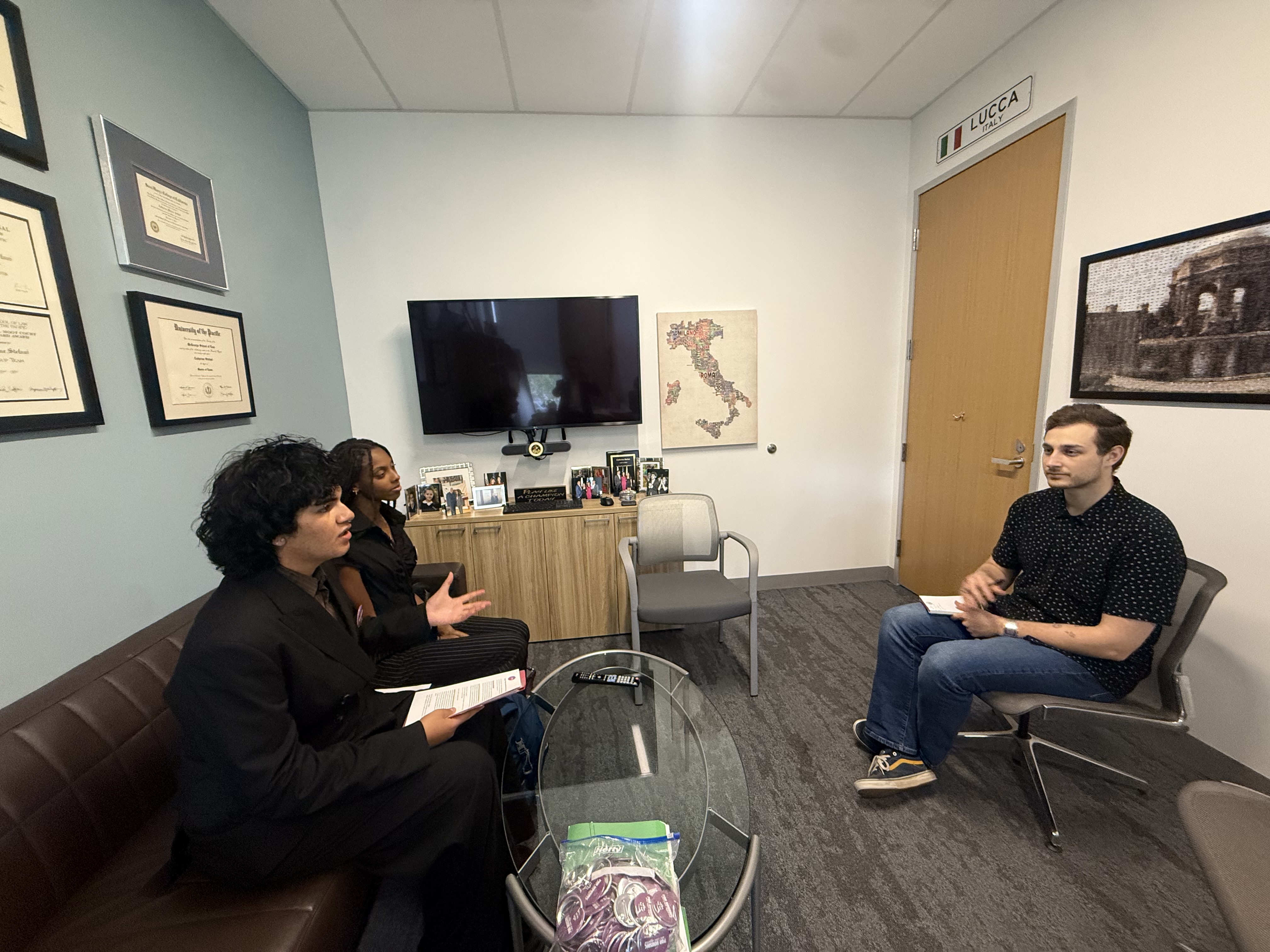
YPA students meeting with legislative staff in California
American Dream Lobby Days
Students in NC, CA, and MI all lobbied on behalf of protections to ensure opportunity, affordability, and community for our generation. This coordinated nationwide effort brought young advocates to state capitols across the country to push for our American Dream Platform priorities.
Students in Action
Young people testifying in front of legislatures
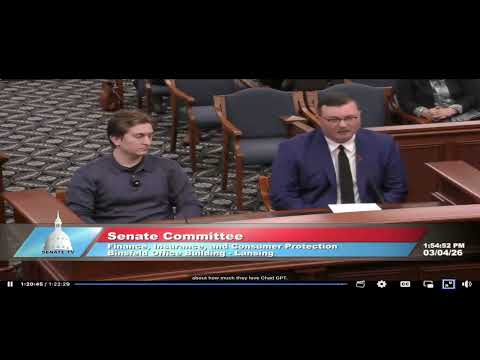
YPA State Director Testifies on Michigan's Kids Over Clicks Package
YPA Michigan State Director James Jandro testifies on behalf of Michigan's Kids Over Clicks legislative package, proposing stronger protections to ensure kids' online safety.
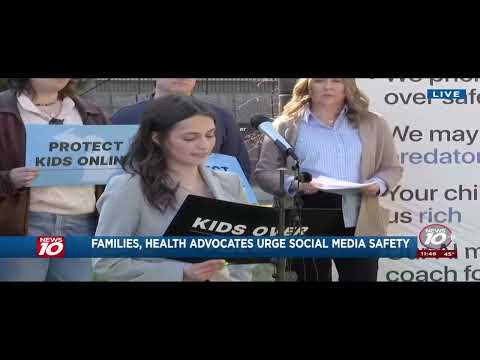
YPA Member Speaks at Michigan "Kids Over Clicks" Press Conference
YPA member Stephanie Iacoban speaks at a press conference in Michigan in support of the "Kids Over Clicks" package, advocating for youth online safety protections.
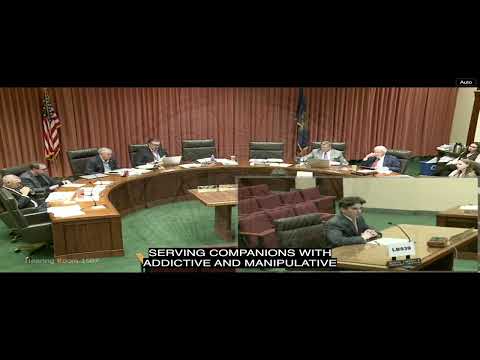
Mick Tobin Testifies in Nebraska on AI Safety Bill
YPA Advocacy Director Mick Tobin testifies in Nebraska in favor of LB939, which creates protections for minors interacting with AI chatbots with humanlike features.
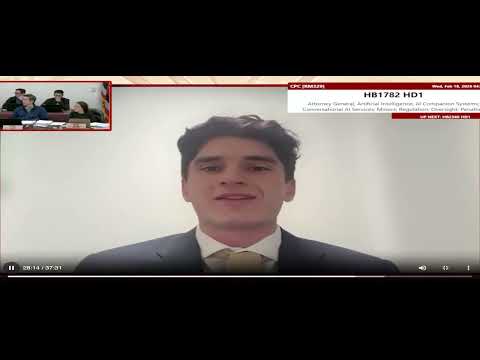
Mick Tobin Testifies in Hawaii on AI Safety Bill
YPA Advocacy Director Mick Tobin testifies in Hawaii in favor of HB1782, establishing safeguards and protections for interactions between minors and AI companion systems.

YPA Member Testifying on HB758 in Virginia
Atiksh Bhan, 16, testifies on behalf of HB758 in Virginia, urging legislators to pass protections against AI companions that breed emotional dependency in minors.
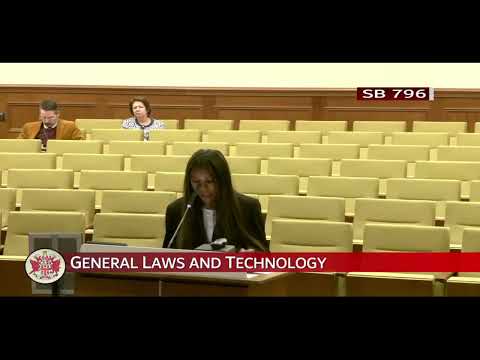
YPA Member Testifying on HB 796 in Virginia
Aniska Manojkumar, 18, testifies on behalf of HB 796 in Virginia, calling for protections against AI companions designed to replace real human connection.
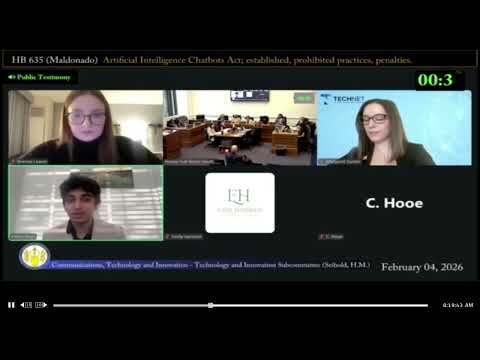
YPA Member Testifying on HB653
Atiksh Bhan testifies on behalf of AI companion bill HB 653, asking legislators to restrict chatbots from encouraging emotional attachment in young people.
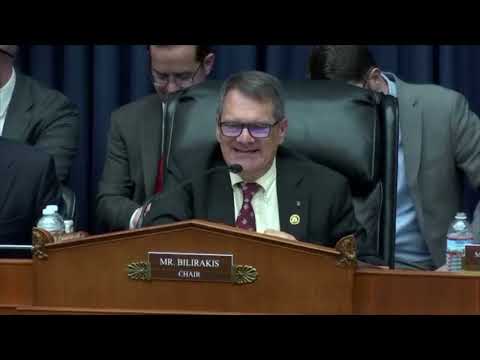
Ava Smithing: Teenage Girls on Instagram
Ava Smithing testifies before the Innovation, Data, and Commerce Subcommittee about the devastating impact of Instagram's algorithms on teenage girls' mental health.
Student Voices
Op-eds written by YPA members shaping the conversation
Schools Should Help Students Navigate AI, Not Ban It
By Akankshya Swain & Lira Roome
Stop testing memory, start measuring learning
By Hamsini Peri
The Case for Intergenerational AI Advocacy
By Arvind Salem
Betting on Crisis: Why Prediction Markets Are a Threat to Democratic Trust
By Rachel Ledoux
You Can Mute Notifications But You Can't Escape the Algorithm
By Sarah Manness
Gen Z Begs Legislators: Make Social Media Social Again
By Sparkle Rainey
Tech giants must protect vulnerable youth from predators
By Mansi Peters
How AI companions are putting young people at risk and what can be done about it
By Joshua Brons
The hidden hunger crisis on UNC campus
By Sarah Maness
Chatbots are harming our children. What can be done?
By Atiksh Bhan
California fails to protect families from AI exploitation
By Sparkle Rainey
How housing policy is failing NC's young people
By Mick Tobin & Iha Pemmaraju
AI protections for minors will help us beat China
By Sam Hiner